Deciding between a rehabilitation center and home rehabilitation is one of the most important choices families face when a loved one needs recovery support. Both options have unique benefits, and the best fit depends on the individual’s medical needs, level of family involvement, safety requirements, and long-term care goals. Understanding the differences can help you make an informed decision that promotes healing, comfort, and quality of life.
Centers like Nisarga Care in Karnataka offer professional guidance to help families choose the right setting for recovery.
Rehabilitation Center: Structured and Professional Support
1. 24/7 Medical Supervision
In a rehabilitation center, patients receive continuous medical and nursing care. Trained professionals monitor vital signs, manage medications, and respond to emergencies quickly. This is especially important for:
-
Post-surgical recovery
-
Serious illnesses
-
Patients with multiple health conditions
A rehabilitation center in Bangalore ensures medical oversight that families may find hard to replicate at home.
2. Multidisciplinary Care Teams
Rehab centers typically involve a team of professionals including:
-
Doctors and nurses
-
Physiotherapists
-
Occupational therapists
-
Nutritionists
-
Psychologists
This coordinated approach supports physical recovery, emotional well-being, mobility, and daily living skills.
3. Structured Programs and Facilities
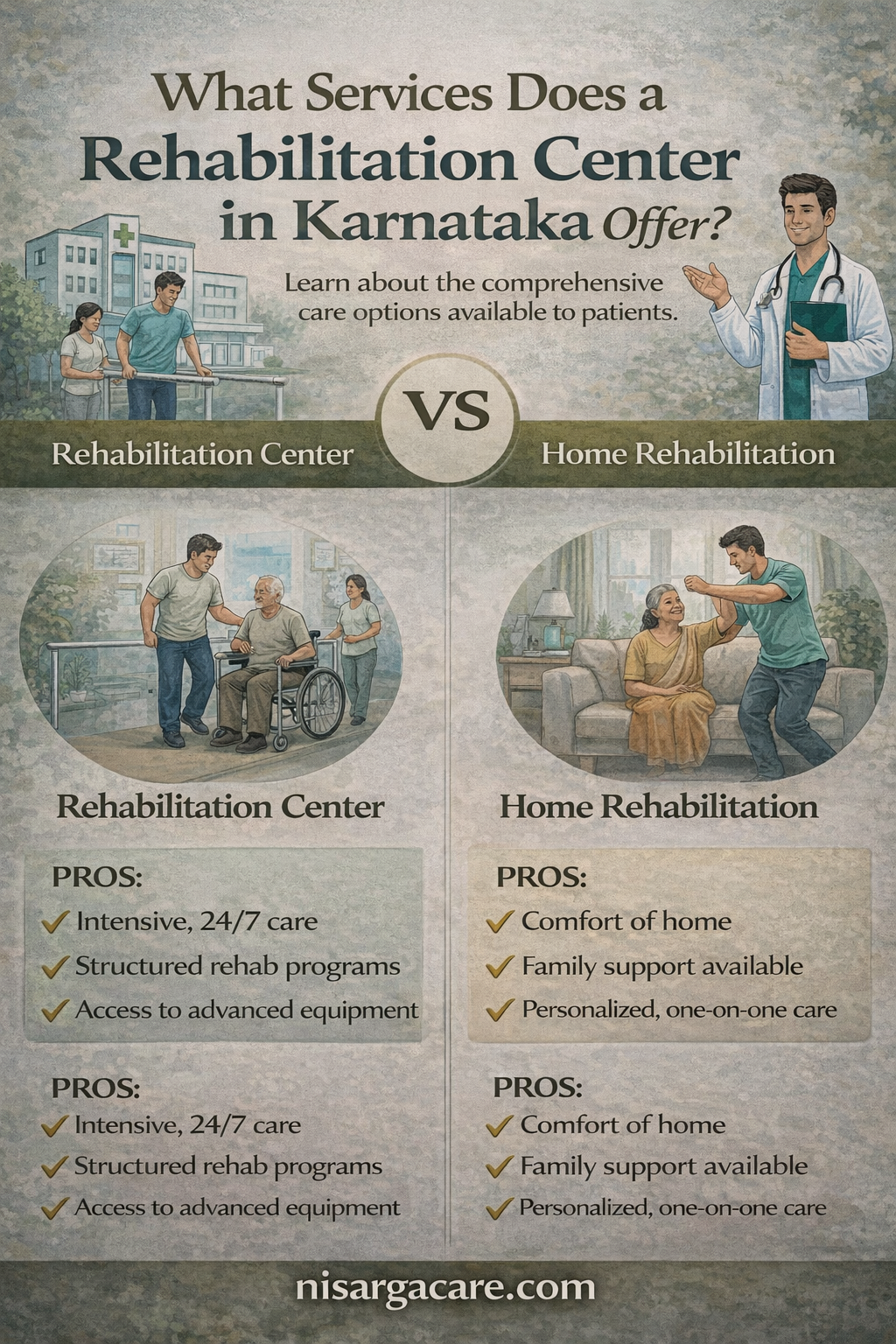
Rehabilitation centers are equipped with therapy rooms, exercise equipment, and safe environments designed to support recovery. Structured daily routines, therapy sessions, and customized care plans help patients progress steadily.
4. Social Interaction and Group Activities
Group activities and peer interaction provide emotional support, reduce isolation, and boost motivation—especially for seniors and long-term recovery patients.
Home Rehabilitation: Comfort and Familiarity
1. Comfort of Home Environment
Recovering at home offers familiarity and emotional comfort. Patients may feel less stressed and more relaxed in their own space, surrounded by family and personal belongings.
2. Personalized One-on-One Care
Home rehabilitation allows caregivers or nurses to focus solely on one patient’s needs. This personalized attention promotes strong emotional support and flexible routines.
3. Family Involvement
Family members can participate closely in care, offering companionship and encouragement throughout recovery. This strengthens emotional bonds and supports psychological well-being.
4. Convenience and Familiarity
Home care eliminates travel to rehab sessions and reduces disruption to daily life. Seniors can maintain their lifestyle with professional support.
Which Is Better? Key Factors to Consider
Medical Needs
-
Rehabilitation Center: Better for patients needing continuous medical supervision, complex therapies, or multidisciplinary care.
-
Home Rehabilitation: Suitable for stable patients with mild to moderate recovery needs or those requiring basic therapy and supervision.
Safety and Monitoring
-
Rehabilitation Center: Ideal for patients at high risk of falls, complications, or unpredictable symptoms.
-
Home Rehabilitation: Works well if the home environment is safe and professional supervision is available.
Family Support and Caregiver Availability
-
Rehabilitation Center: Great for families unable to provide round-the-clock care.
-
Home Rehabilitation: Works when family members are actively involved and can coordinate with professional caregivers.
Social and Mental Well-Being
-
Rehabilitation Center: Provides community and peer support.
-
Home Rehabilitation: Offers emotional comfort and familiarity, which is important for seniors with anxiety or dementia.
Conclusion: Balancing Needs and Comfort
There is no one-size-fits-all answer. A rehabilitation center is better for medically complex cases, structured therapy, and continuous supervision. Home rehabilitation is ideal for stable patients who thrive in familiar environments with family support.