
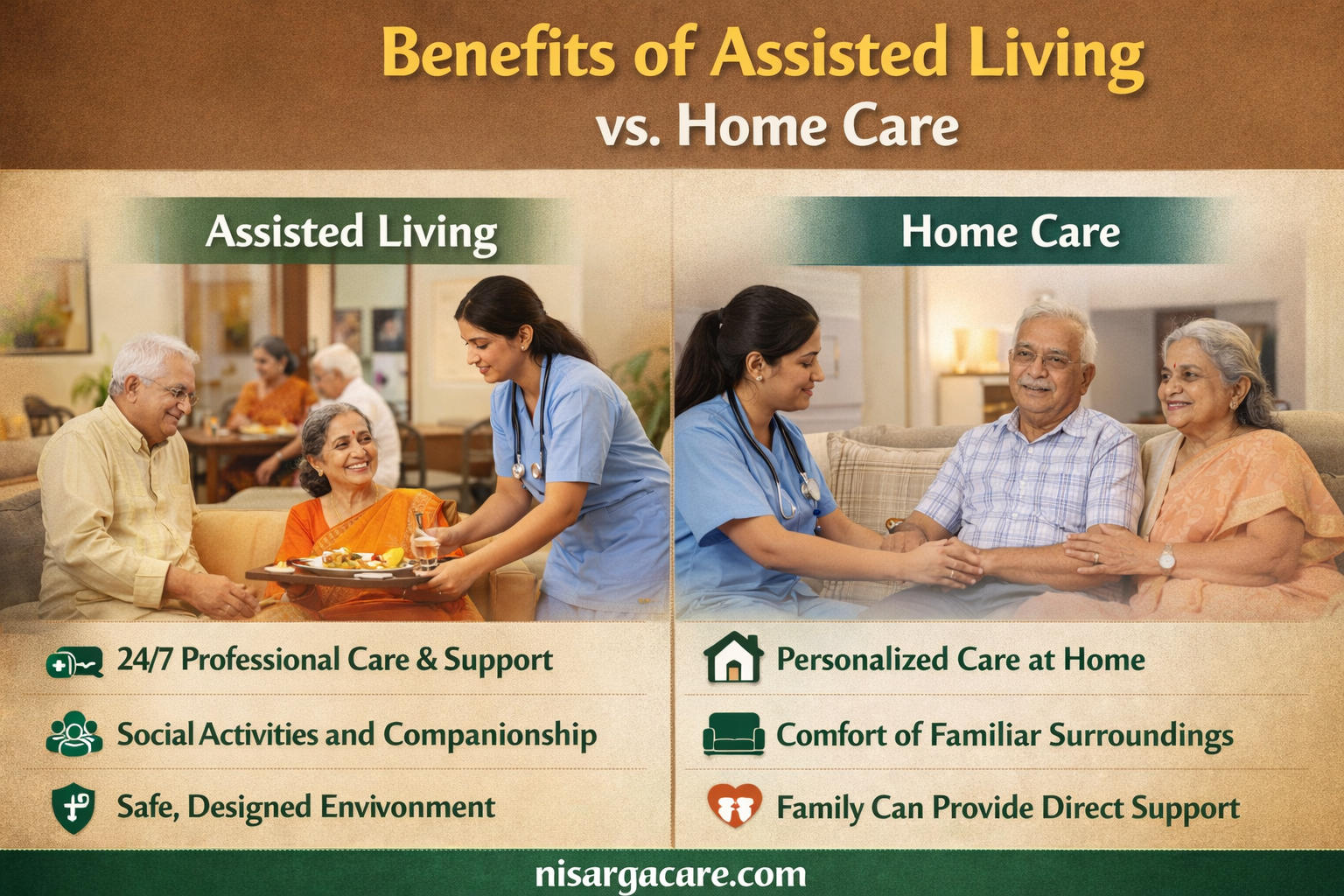
As parents and elders age, families often face a critical decision—whether to opt for assisted living or continue care at home. Both options offer unique advantages, and the right choice depends on health needs, lifestyle preferences, and family involvement. Understanding the benefits of each can help families make a thoughtful, stress-free decision.
Benefits of Assisted Living
Assisted living facilities are designed to support seniors who need help with daily activities while maintaining independence. One major benefit is round-the-clock supervision. Trained caregivers are always available, ensuring immediate assistance during medical or mobility emergencies.
Assisted living also provides structured daily routines, including meals, medication management, and personal care. This consistency helps seniors feel secure and reduces the burden on family members. Many facilities offer on-site physiotherapy, rehabilitation, and wellness programs, which support mobility and faster recovery.
Another important advantage is social engagement. Seniors in assisted living interact with peers through group activities, celebrations, and hobbies, reducing loneliness and depression. Safety features such as handrails, emergency call systems, and wheelchair-friendly spaces further enhance peace of mind for families.
Benefits of Home Care
Home care allows seniors to remain in a familiar environment, which can be emotionally comforting, especially for those with memory-related conditions. Being at home preserves routines, personal space, and a sense of independence that many elders deeply value.
Home care is also highly flexible. Families can customize services—ranging from a few hours of assistance to full-day medical support—based on evolving needs. It enables closer family involvement and stronger emotional bonding, which is especially important in Indian households.
Additionally, home care can be cost-effective for seniors who need limited assistance rather than constant supervision. Professional caregivers, physiotherapists, and nurses can be scheduled as required, without relocating the elder.
Choosing the Right Option
There is no one-size-fits-all solution. Assisted living suits seniors who require regular supervision, medical support, and social interaction. Home care is ideal for elders who are relatively independent but need occasional assistance and emotional familiarity.
Conclusion
Both assisted living and home care offer valuable benefits when chosen thoughtfully. The best decision prioritizes the elder’s safety, comfort, emotional wellbeing, and medical needs. By evaluating these factors carefully, families can ensure their loved ones receive respectful, dignified, and compassionate care.