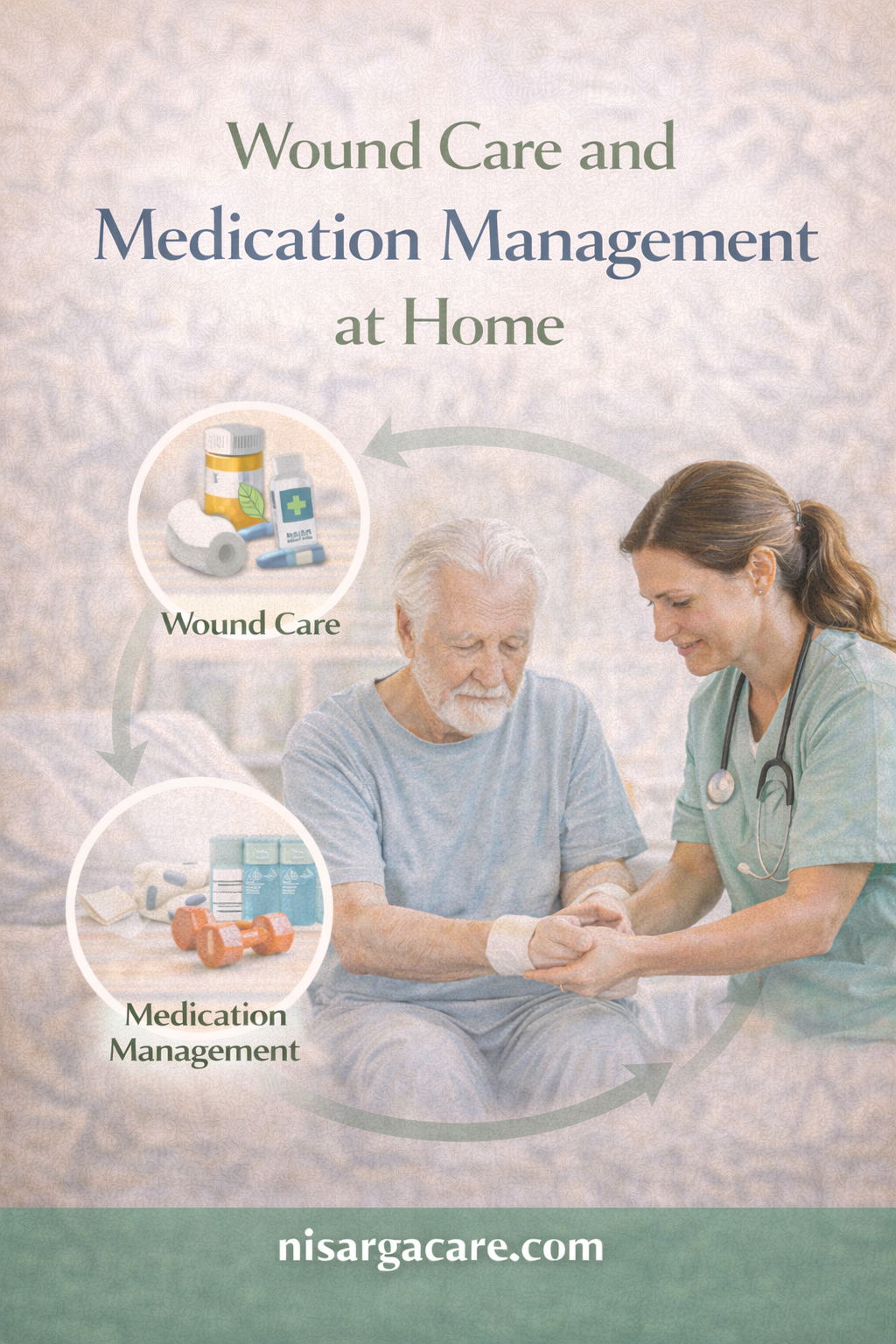
Recovering at home after surgery, injury, or illness requires careful medical attention—especially when wounds and medications are involved. Improper wound care or missed medications can lead to infections, delayed healing, and avoidable hospital readmissions. Professional wound care and medication management at home ensure patients heal safely while remaining comfortable in familiar surroundings.
This approach is especially beneficial for elderly patients, post-surgical individuals, and those with chronic conditions who need consistent medical support.
Importance of Proper Wound Care at Home
Wounds—whether surgical incisions, pressure sores, or injury-related cuts—require regular assessment and care. At-home wound care includes:
-
Cleaning and dressing wounds correctly
-
Monitoring for signs of infection such as redness, swelling, or discharge
-
Ensuring wounds remain dry and protected
-
Promoting faster and safer healing
Trained healthcare professionals understand how to manage different types of wounds and can identify complications early, preventing them from worsening.
Preventing Infections and Complications
Infections are one of the most common reasons for delayed recovery and hospital re-admission. Proper wound care at home reduces exposure to hospital-acquired infections and ensures wounds are handled using sterile techniques.
Early detection of infection signs allows immediate medical attention, preventing serious health risks.
Role of Medication Management in Recovery
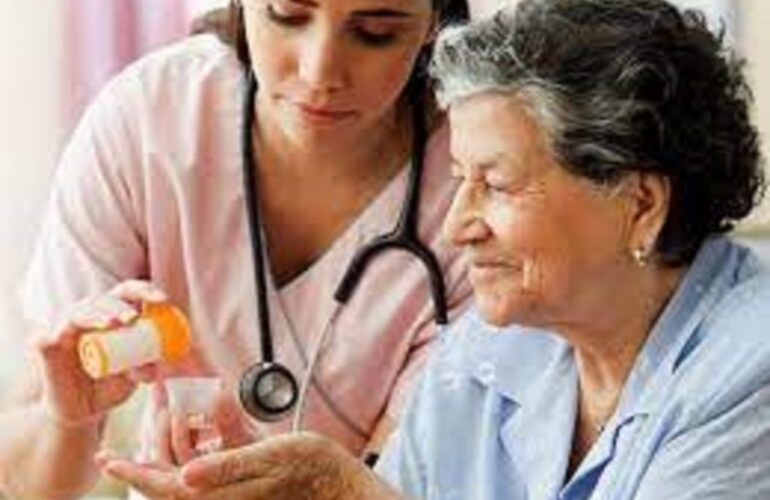
Medication management is equally critical during recovery. Patients are often prescribed multiple medications after hospitalization, including antibiotics, pain relievers, and chronic condition medications. Errors in dosage or timing can lead to complications.
Home-based medication management ensures:
-
Timely and accurate medication administration
-
Correct dosage and method (oral, injection, topical)
-
Monitoring for side effects or adverse reactions
-
Coordination with doctors for medication adjustments
This structured approach helps maintain treatment effectiveness and patient safety.
Reducing the Risk of Hospital Re-admission
Poor wound care and medication errors are leading causes of re-admission. Professional home care addresses both issues simultaneously, reducing the likelihood of complications that require emergency treatment.
With regular monitoring and expert supervision, minor concerns are resolved early, preventing them from becoming serious medical problems.
Comfort and Emotional Well-Being
Healing at home offers emotional comfort that hospitals often cannot provide. Patients feel more relaxed and confident in familiar surroundings. Professional caregivers also provide reassurance, education, and emotional support, which positively impacts recovery.
A calm environment combined with expert care promotes faster healing and overall well-being.
Support for Families and Caregivers
Family members may feel overwhelmed managing wounds and medications without medical training. Home healthcare professionals reduce this burden by handling complex medical tasks, allowing families to focus on emotional support rather than technical care.
This ensures consistency, accuracy, and peace of mind for everyone involved.
Who Benefits Most from Home-Based Care?
Wound care and medication management at home are ideal for:
-
Post-surgical patients
-
Elderly individuals
-
Patients with limited mobility
-
Those recovering from serious illness
-
Individuals with chronic wounds or long-term medication needs
Conclusion: Why Nisarga Care Is the Right Choice
Effective wound care and medication management are essential for safe recovery at home. Nisarga Care provides professional, compassionate, and reliable home healthcare services tailored to each patient’s medical needs. With trained nurses, strict safety protocols, and personalized care plans, Nisarga Care ensures wounds heal properly and medications are managed accurately.
Trusted across Karnataka for its quality post-hospitalization and home nursing services, Nisarga Care helps patients recover comfortably, prevents complications, and reduces the risk of hospital re-admissions—offering families confidence, care, and peace of mind during recovery.