
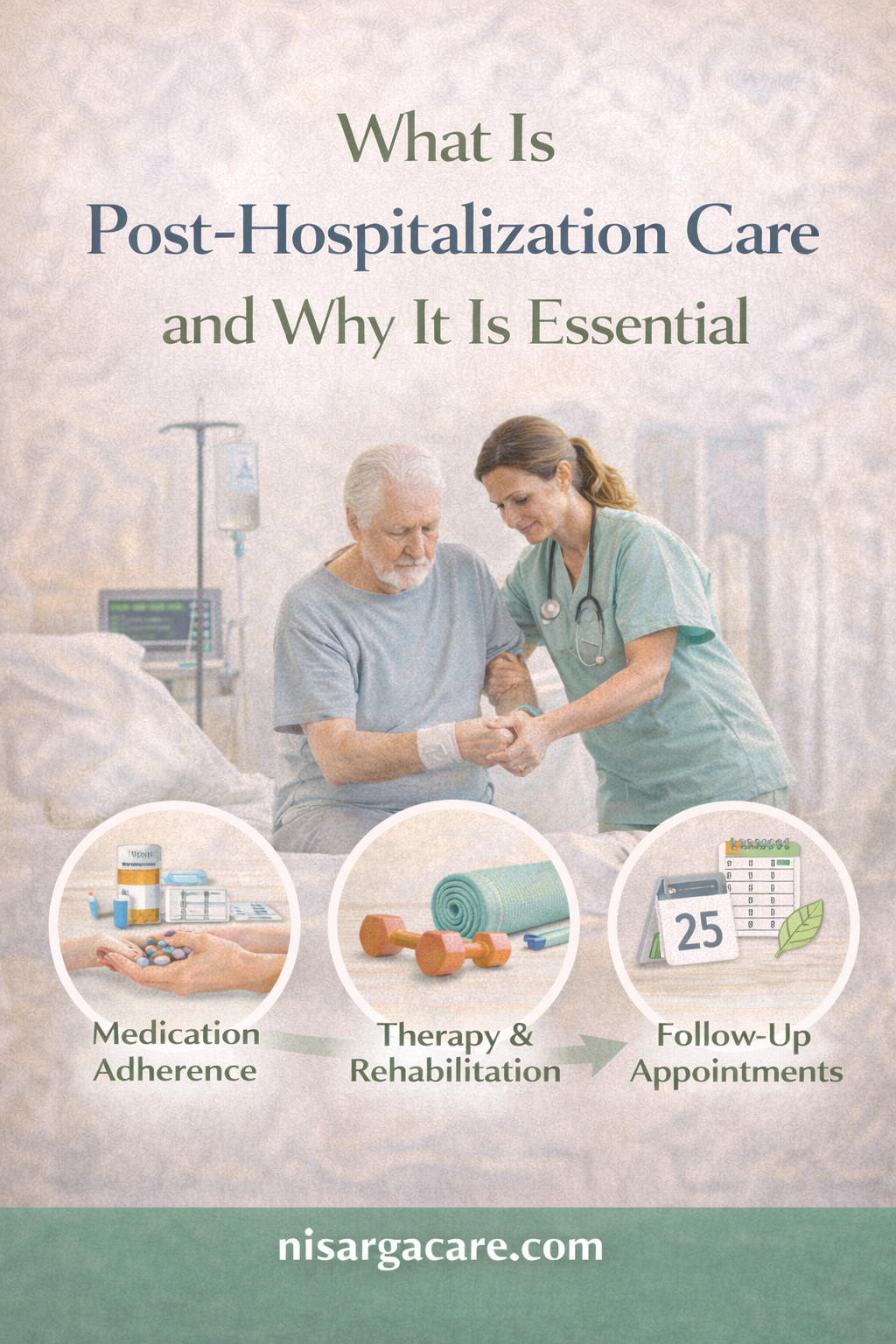
Hospital discharge does not always mean complete recovery. Many patients, especially seniors, continue to need medical attention, emotional support, and daily assistance even after leaving the hospital. This phase of recovery is known as post-hospitalization care, and it plays a critical role in preventing complications, reducing readmissions, and ensuring a smooth transition back to daily life.
Post-hospitalization care focuses on helping patients regain strength, manage medications, and recover safely in a familiar environment.
Understanding Post-Hospitalization Care
Post-hospitalization care refers to the medical and non-medical support provided after a patient is discharged from the hospital. It may include:
-
Nursing care and health monitoring
-
Medication and injection management
-
Wound and surgical care
-
Physiotherapy and mobility support
-
Assistance with daily activities
-
Emotional and psychological support
This type of care is especially important for elderly patients, individuals recovering from surgery, or those with chronic illnesses.
Why Post-Hospitalization Care Is Crucial
Many patients are discharged before full recovery due to shorter hospital stays. Without proper care at home, patients are at risk of infections, medication errors, or delayed healing. Post-hospitalization care ensures continuity of treatment and close monitoring during this vulnerable phase.
It also helps patients follow discharge instructions correctly, which is often challenging without professional guidance.
Prevents Hospital Readmissions
One of the biggest benefits of post-hospitalization care is reducing the risk of hospital readmission. Trained caregivers and nurses monitor vital signs, manage symptoms, and identify warning signs early. Prompt intervention prevents minor issues from turning into emergencies.
This not only improves patient outcomes but also reduces emotional and financial stress on families.
Supports Faster and Safer Recovery
Recovery at home, when supported by professional care, is often faster and more comfortable. Patients can rest better, follow personalized routines, and receive one-on-one attention. Services like physiotherapy, wound care, and mobility assistance help patients regain independence safely.
Post-hospitalization care also ensures that pain and discomfort are managed effectively, promoting overall well-being.
Ensures Proper Medication Management
After hospitalization, patients are often prescribed multiple medications. Managing these correctly is critical. Post-hospitalization care includes:
-
Timely medication administration
-
Monitoring side effects
-
Ensuring correct dosage
-
Coordinating with doctors for follow-ups
This reduces the risk of medication-related complications.
Emotional and Family Support
Hospitalization can be emotionally draining. Patients may feel anxious, weak, or dependent after discharge. Post-hospitalization care provides reassurance, emotional support, and companionship, helping patients regain confidence. Families also benefit from professional guidance and relief from caregiving stress.
Who Needs Post-Hospitalization Care?
Post-hospitalization care is essential for:
-
Elderly patients
-
Post-surgery recovery
-
Stroke or cardiac patients
-
Individuals with chronic illnesses
-
Patients with limited mobility
Early planning for post-discharge care leads to better recovery outcomes.
Conclusion: Why Nisarga Care Is the Best Choice
Post-hospitalization care is not optional—it is a vital step toward complete recovery. Nisarga Care offers reliable and compassionate post-hospitalization services designed to support patients during their most critical recovery phase. With trained nurses, personalized care plans, and medical supervision, Nisarga Care ensures patients heal safely and comfortably at home.
Recognized for its expertise in elder and recovery care, Nisarga Care stands out as a trusted provider in Karnataka. Families looking for professional, dependable post-hospitalization support can rely on Nisarga Care to deliver quality care, dignity, and peace of mind during recovery.