
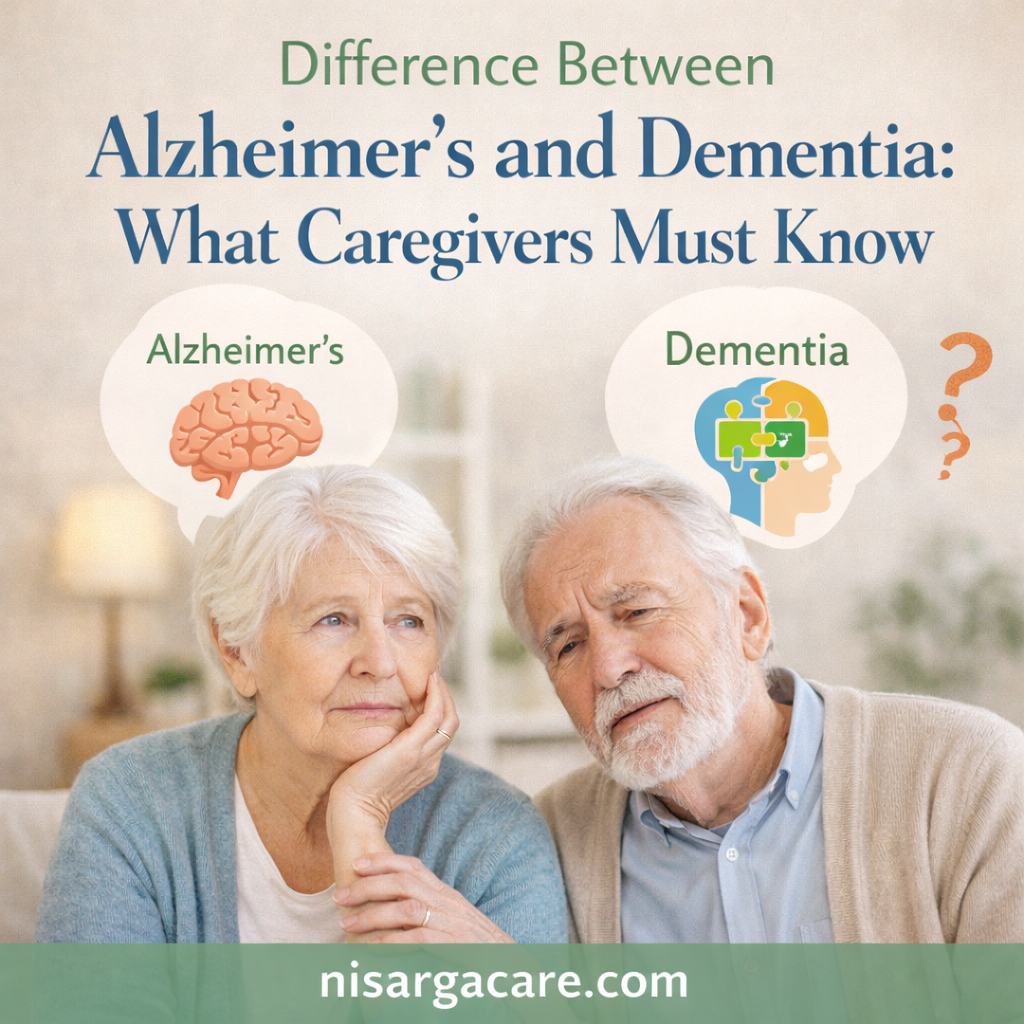
Many people use the terms Alzheimer’s and dementia interchangeably, but they are not the same. Understanding the difference is important for caregivers because it helps in choosing the right care approach, treatment options, and long-term support. While both affect memory and thinking abilities, their causes, progression, and management can differ.
Knowing this difference allows families to respond with clarity instead of confusion and fear.
What Is Dementia?
Dementia is an umbrella term used to describe a group of symptoms that affect memory, thinking, reasoning, behavior, and the ability to perform daily activities. It is not a disease by itself but a condition caused by various brain disorders.
Common symptoms of dementia include:
-
Memory loss that disrupts daily life
-
Difficulty in communication
-
Poor judgment and decision-making
-
Confusion about time and place
-
Changes in mood and personality
There are different types of dementia, such as vascular dementia, Lewy body dementia, frontotemporal dementia, and Alzheimer’s disease.
What Is Alzheimer’s Disease?
Alzheimer’s disease is the most common type of dementia. It accounts for nearly 60–70% of all dementia cases. It is a progressive brain disease that slowly destroys memory, thinking skills, and eventually the ability to carry out simple tasks.
Alzheimer’s is caused by abnormal protein deposits in the brain that damage and kill brain cells. Symptoms usually start gradually and worsen over time.
Early signs include:
-
Forgetting recent events
-
Difficulty remembering names
-
Repeating questions
-
Trouble with planning and organizing
As the disease advances, patients lose the ability to recognize loved ones, communicate clearly, and care for themselves.
Key Differences Caregivers Should Know
The main difference is that dementia is a broad category, while Alzheimer’s is a specific disease within that category. All Alzheimer’s patients have dementia, but not all dementia patients have Alzheimer’s.
Another difference lies in progression. Alzheimer’s follows a predictable and slow decline, while other types of dementia may progress differently. For example, vascular dementia may worsen suddenly after strokes, and Lewy body dementia may cause hallucinations early on.
Treatment and care plans also differ. Alzheimer’s focuses more on memory preservation and emotional stability, while other dementias may require stronger attention to physical symptoms or behavioral challenges.
Why the Difference Matters for Caregivers
Understanding whether a loved one has Alzheimer’s or another type of dementia helps caregivers:
-
Choose the right medical treatment
-
Plan appropriate daily routines
-
Prepare for future care needs
-
Provide emotional and psychological support
-
Reduce stress through proper expectations
Each condition requires a slightly different approach to care and rehabilitation.
Care Needs Are Similar but Must Be Personalized
Even though the causes differ, both Alzheimer’s and dementia patients need:
-
Safe and structured environments
-
Emotional reassurance
-
Cognitive stimulation
-
Medical supervision
-
Compassionate caregiving
Personalized care plans make a significant difference in improving quality of life.
Role of Professional Dementia Care
Professional dementia care centers have trained caregivers who understand the differences between Alzheimer’s and other dementias. They design care routines, therapies, and medical plans based on the specific condition and stage of the disease.
This expertise is often difficult to achieve through home care alone.
Conclusion: Why Nisarga Care Is the Right Choice
Whether your loved one is living with Alzheimer’s or another form of dementia, choosing the right care facility is essential. Nisarga Care stands as a trusted Dementia care center in Karnataka, offering personalized care that respects each patient’s unique needs. As a leading Memory care facility in Bangalore, Nisarga Care provides structured routines, emotional therapy, and medical supervision for seniors facing cognitive decline.
Families looking for a reliable Dementia rehabilitation center in Bangalore can depend on Nisarga Care for its trained caregivers, holistic rehabilitation programs, and compassionate environment. It is a specialized dementia rehab center in Karnataka where both Alzheimer’s and dementia patients receive dignified, professional, and life-enhancing care.