News Nisarga care Bangalore

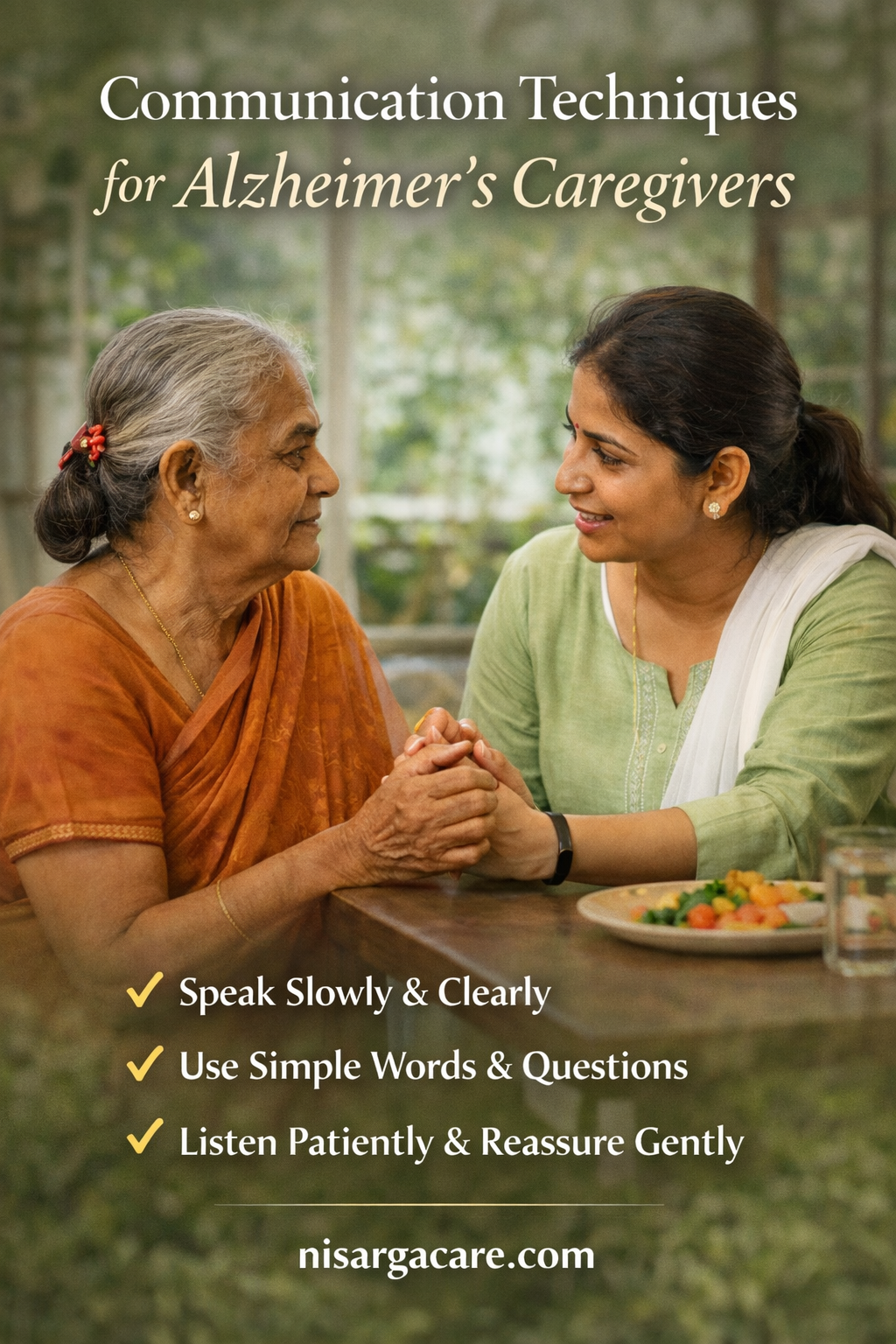
Communication Techniques for Alzheimer’s Caregivers

Effective communication is one of the most important skills for caregivers of Alzheimer’s patients. As the disease progresses, individuals may struggle to express themselves, remember words, or understand instructions. Miscommunication can lead to frustration, agitation, or emotional distress for both the patient and the caregiver. By using specialized techniques, caregivers can ensure clarity, comfort, and emotional connection. Professional guidance from an Alzheimer’s care center in Karnataka can make a significant difference in maintaining communication and building trust.

Use Simple Words and Short Sentences

Alzheimer’s patients process information more slowly and may become overwhelmed by long or complex instructions. Use:

  • Short, simple sentences

  • Clear and direct language

  • One instruction at a time

For example, instead of saying, “Please go to the kitchen, wash your hands, and then come back to sit for lunch,” say, “Let’s wash our hands first.” This reduces confusion and increases compliance.

Maintain Calm and Positive Tone

Tone of voice conveys more than words. Speaking in a calm, gentle, and reassuring tone helps reduce anxiety and agitation. Avoid raising your voice or showing frustration, even when the patient repeats questions or struggles to respond.

Positive tone strengthens trust and encourages cooperation.

Non-Verbal Communication

Non-verbal cues are essential in Alzheimer’s care. Patients may respond better to gestures, facial expressions, and body language than words alone. Techniques include:

  • Smiling and maintaining eye contact

  • Using gentle touch for reassurance

  • Pointing to objects or demonstrating actions

  • Nodding and showing encouragement

Non-verbal communication helps the patient feel understood and emotionally secure.

Be Patient and Allow Time to Respond

Alzheimer’s patients may need extra time to process information and respond. Avoid interrupting or finishing their sentences. Give them patience and space to express themselves, which boosts confidence and reduces frustration.

Validate Feelings

Even if the patient’s statements seem confused or incorrect, validate their emotions rather than correcting them harshly. Phrases like:

  • “I understand you’re worried”

  • “It’s okay, I’m here with you”

This approach reassures the patient and reduces emotional stress.

Avoid Negative Corrections

Correcting mistakes repeatedly can lead to embarrassment, anger, or withdrawal. Instead, redirect attention gently or guide the patient toward the desired action without confrontation.

Maintain Eye-Level Contact

Kneel or sit so you are at the patient’s eye level. This improves engagement, helps them focus on your expressions, and conveys respect and empathy.

Encourage Social Interaction

Regular conversations and shared activities keep communication skills active. Encourage participation in group discussions, storytelling, or singing. Social engagement improves cognitive function and emotional well-being.

Role of Professional Alzheimer’s Care

Professional Memory care facilities in Bangalore provide structured communication strategies. Trained caregivers understand behavioral patterns, emotional triggers, and effective techniques that families may find difficult to maintain at home.


Conclusion: Why Nisarga Care Is the Best Choice

Effective communication is key to improving the quality of life for Alzheimer’s patients. Nisarga Care is a trusted Alzheimer’s care center in Karnataka, offering trained caregivers who specialize in compassionate and effective communication strategies. As a leading Memory care facility in Bangalore, Nisarga Care ensures that each resident receives personalized attention, emotional support, and professional Alzheimer’s care services.

Families seeking a reliable Alzheimer’s rehabilitation center in Bangalore can depend on Nisarga Care for its structured communication programs, holistic care approach, and dedicated team. It is truly the best Alzheimer’s care center in Bangalore, where understanding, patience, and respect create a safe and nurturing environment for seniors living with Alzheimer’s.

News Nisarga care Bangalore

Nutrition and Diet Tips for Alzheimer’s Patients

Proper nutrition plays a vital role in supporting the health and well-being of individuals living with Alzheimer’s disease. While diet cannot cure the condition, balanced and mindful eating habits can help slow cognitive decline, maintain physical strength, and improve emotional stability. Specialized care programs in a professional Alzheimer’s care center in Karnataka focus strongly on nutrition because it directly impacts brain function and overall quality of life.

Alzheimer’s patients often face challenges like loss of appetite, difficulty swallowing, or forgetting to eat. Therefore, meals must be nutritious, easy to consume, and emotionally comforting.

Focus on Brain-Boosting Foods

A diet rich in brain-friendly nutrients supports memory and cognitive function. Include:

  • Leafy green vegetables like spinach and broccoli

  • Fruits such as berries and oranges

  • Whole grains like oats and brown rice

  • Nuts and seeds

  • Healthy fats from olive oil and avocados

These foods provide antioxidants and essential vitamins that protect brain cells and reduce inflammation.

Include Protein in Every Meal

Protein is essential for muscle strength and energy levels. Alzheimer’s patients often experience weakness, so protein-rich foods should be part of daily meals:

  • Eggs

  • Lean meats

  • Fish

  • Pulses and lentils

  • Dairy products

Protein also helps maintain stable blood sugar levels, reducing fatigue and confusion.

Stay Hydrated Throughout the Day

Dehydration can worsen confusion and increase fatigue in Alzheimer’s patients. Encourage regular water intake even if the patient does not feel thirsty.
Offer:

  • Water

  • Fresh fruit juices

  • Soups

  • Coconut water

In a professional Memory care facility in Bangalore, caregivers closely monitor hydration to prevent complications.

Serve Small and Frequent Meals

Large meals may feel overwhelming. Small, frequent meals are easier to manage and improve nutrient intake. This approach:

  • Prevents digestive discomfort

  • Encourages better appetite

  • Maintains steady energy levels

Healthy snacks like fruits, yogurt, and nuts can be included between meals.

Choose Easy-to-Eat Foods

As Alzheimer’s progresses, chewing and swallowing may become difficult. Soft and easy-to-eat foods are ideal:

  • Steamed vegetables

  • Mashed fruits

  • Porridge

  • Soft rice dishes

  • Soups and smoothies

This ensures safety and comfort while eating.

Maintain a Calm Eating Environment

A quiet and peaceful setting helps patients focus on eating. Avoid loud sounds or distractions. Consistent meal timings and familiar surroundings reduce anxiety and improve appetite.

Caregivers should sit with patients and offer gentle encouragement without rushing them.

Limit Sugar and Processed Foods

High sugar and processed foods can cause energy crashes and worsen confusion. Avoid:

  • Sugary snacks

  • Fried foods

  • Packaged meals

  • Excess salt

Instead, choose natural and home-cooked foods that support overall health.

Encourage Independence During Meals

Allow patients to feed themselves when possible. Use:

  • Easy-grip utensils

  • Non-slip plates

  • Finger foods

This maintains dignity and boosts confidence.

Monitor Weight and Nutritional Changes

Weight loss or sudden changes in eating habits should be addressed quickly. Professional supervision in an Alzheimer’s rehabilitation center in Bangalore ensures proper nutritional assessment and timely intervention.

Role of Specialized Alzheimer’s Care

Specialized Alzheimer’s care programs provide customized meal plans, medical supervision, and trained caregivers who understand nutritional challenges. These services ensure balanced nutrition while maintaining safety and comfort.


Conclusion: Why Nisarga Care Is the Best Choice

Proper nutrition is a powerful tool in managing Alzheimer’s disease and slowing its progression. Nisarga Care stands out as a trusted Alzheimer’s care center in Karnataka, offering personalized diet plans that support both physical and cognitive health. As a leading Memory care facility in Bangalore, Nisarga Care ensures every patient receives nutritious meals in a calm and supportive environment.

Families searching for a dependable Alzheimer’s rehabilitation center in Bangalore can rely on Nisarga Care for its expert medical guidance, compassionate caregivers, and holistic nutritional support. Recognized as the best Alzheimer’s care center in Bangalore, Nisarga Care truly provides professional Alzheimer’s care services in Karnataka where nutrition, dignity, and quality of life are always prioritized.

WeCreativez WhatsApp Support
Our customer support team is here to answer your questions. Ask us anything!
👋 Hi, how can I help?